Labels
Every plate we engrave, sold on its own — all 113 of them. Open any label, set its holes and the numbers it carries, choose how many, and add it to your cart. One plate or a few hundred: the volume breaks at 25, 50 and 100 plates count across the whole order.
- PickOpen a label, set it up, add it to your cart — the same label twice with different wording is two lines.
- Check outProof, price and tax on the last screen, before anything is sent.
- EngravedCut in Burlington, Ontario and shipped Canada-wide.
113 labels shown
No label matches that. Try fewer words, or design your own in the builder.
Canada-wide
58 labelsThe national set — 58 plates the Code puts on a solar install anywhere in Canada. They are cut to the wording of the province chosen above.
-
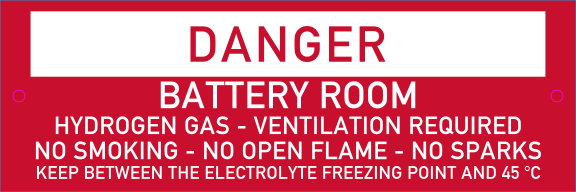
Battery room ventilation
Good practice — no rule number
At the entrance to any room or area containing batteries that vent hydrogen.
-

Combiner box - energized DC inside
Good practice — no rule number
On the cover of every PV DC combiner and recombiner.
-
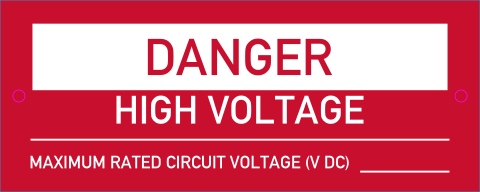
High voltage - DC circuits over 750 VDC
64-202(5)(c)
On every enclosure containing PV source/output circuits over 750 V dc (64-202(5)(c)) and on energy storage system enclosures with dc circuits over 750 V dc (64-904(2)(c)); engrave the maximum rated circuit voltage.
-
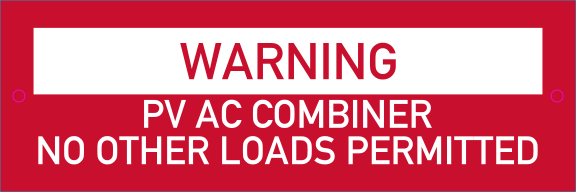
AC combiner - no other loads permitted
64-112(4)(g)(ii)
On equipment that combines AC supply circuits only (AC combiner / solar-only panelboard) with a single output overcurrent device.
-
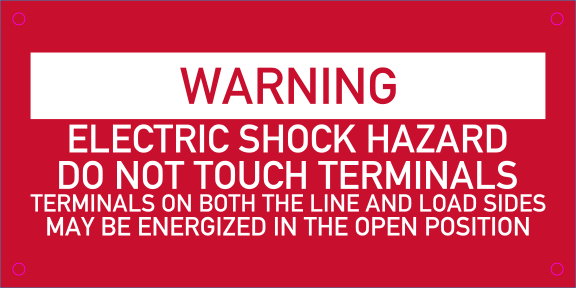
AC disconnect - shock hazard, two sources
64-060(1)(h) & 84-024(1)(i); 64-914 on ESS disconnects
All AC disconnects supplied from two sources of power, and every energy storage system disconnecting means (CEC 2024 Rule 64-914).
-
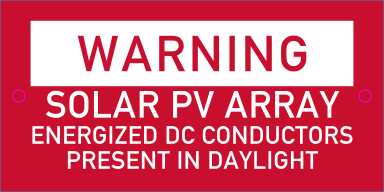
Array boundary / roof marking
Good practice — no rule number
At the array boundary and roof access points.
-
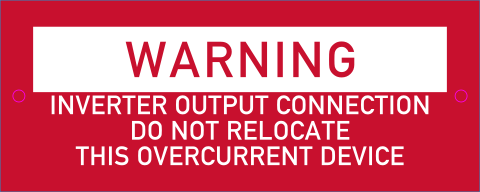
Backfed breaker - do not relocate
64-112(4)(c)
At the PV input breaker in the electrical panelboard.
-
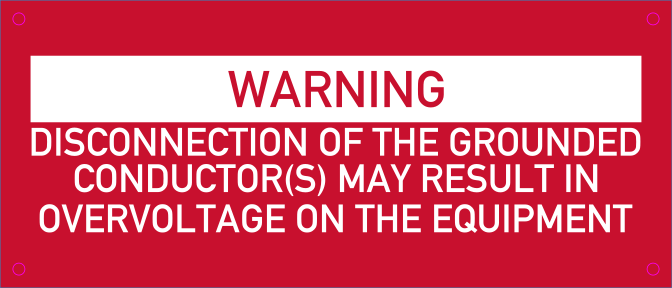
Bipolar system - grounded conductor warning
64-056(5) (2018 numbering; 2024 number not verified)
At the inverter and at each monopole disconnecting means of a bipolar PV array.
-

DC raceway / conduit marker
Good practice — no rule number
On raceways, cable trays, enclosures and junction boxes carrying PV DC circuits, at intervals set by the AHJ.
-

Do not adjust settings
Good practice — no rule number
On equipment whose field settings are protected and must not be changed by the consumer.
-

Do not disconnect under load (PV connectors)
64-220(3)
At readily accessible PV plug connectors or similar wiring devices that are not rated for interrupting current and are not manufacturer-marked.
-

Do not operate under load
Good practice — no rule number
On PV DC switches and combiners not rated for load break.
-
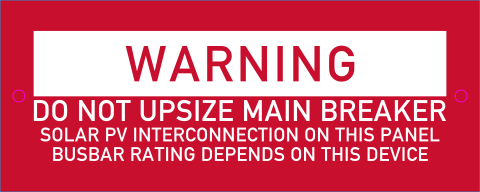
Do not upsize main breaker
Good practice — no rule number
At the main breaker of a panelboard with a PV interconnection.
-
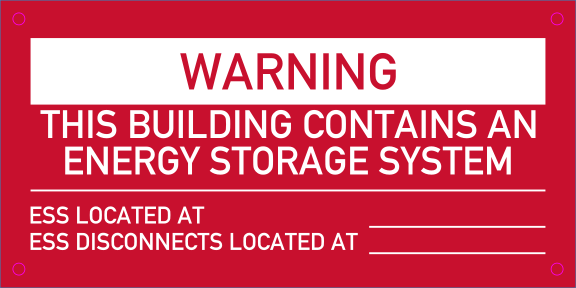
Energy storage - building placard
64-902(1)
On the building or structure containing the energy storage system.
-

Energy storage system warning
64-076(3)
At renewable-energy systems containing electrical energy storage.
-
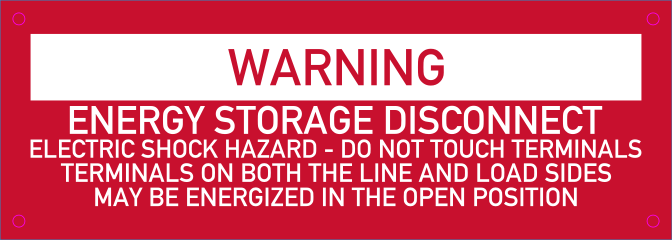
ESS disconnect - terminals energized both sides
64-914(7)
On each energy storage system disconnecting means (integral or separate).
-
-
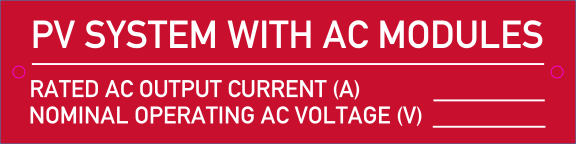
Micro-inverter / AC module
64-074(1) & 2-100 (after wording fix; ESA 64-5-4 A11/A12)
At the AC module or micro-inverter branch circuit.
-

More than one live circuit
Good practice — no rule number
On a control box energized from more than one circuit that has no means of disconnecting all ungrounded conductors.
-

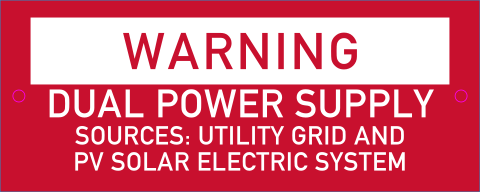
Multiple power supplies
14-414(3) & 64-112(4)(d)
Inverters and equipment fed from two sources - one per source disconnect, or one label indicating multiple disconnects must be opened.
-
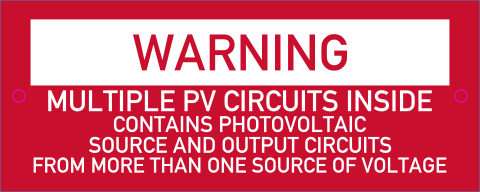
Multiple PV circuits in enclosure
64-210(10)(b)
At each enclosure and junction box giving access to conductors of multiple PV source and output circuits of different voltage sources.
-
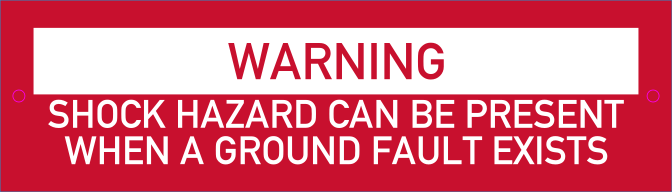
Not solidly grounded - ground-fault shock hazard
64-066(7)
At the inverter, DC disconnect, DC combiners and DC junction boxes of functionally grounded (transformerless) or ungrounded systems.
-
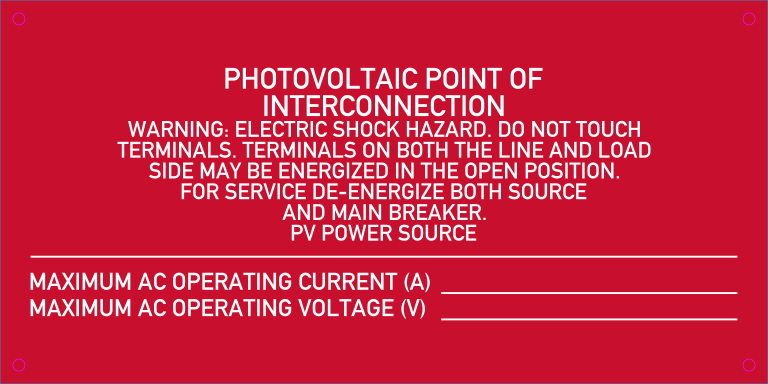
Photovoltaic point of interconnection
64-112(4)(c) (content also 64-074(1) & 64-060(1)(h))
At the photovoltaic point of interconnection in the panelboard.
-
-

PV junction / pull box
64-068(1)(b) (ungrounded) / 64-210 multiple-circuit enclosure notice (2024 subrule unverified)
On PV junction and pull boxes.
-
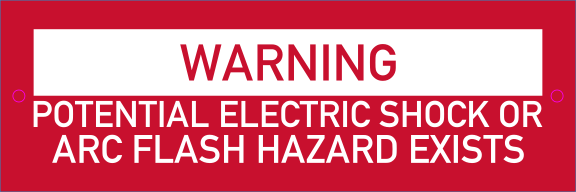
Shock and arc flash hazard
2-306(1)
On switchboards, panelboards, industrial control panels, meter socket enclosures and MCCs in other than dwelling units that may be worked on while energized - PV AC combiners, inverter AC panels, interconnection switchboards.
-
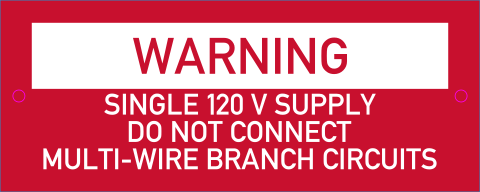
Single 120 V supply - no multi-wire circuits
64-102(c)(iv)
On or adjacent to the disconnecting means / distribution equipment fed by a single 120 V stand-alone inverter.
-
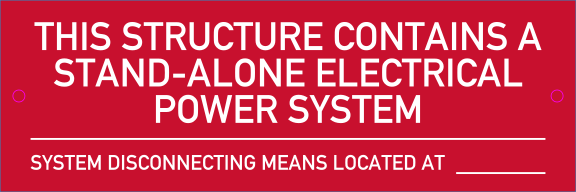
Stand-alone power system - disconnect location
64-076(1) (2021: 64-074(1); 2024 subrule number not verified against CSA text)
On the building or structure, at the service entrance or main entrance, conspicuous.
-
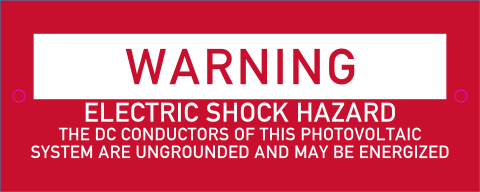
Ungrounded DC conductors
64-068(1)(b) & 64-066(7)
DC combiners, DC junction boxes, DC disconnects and inverters - ungrounded systems only.
-
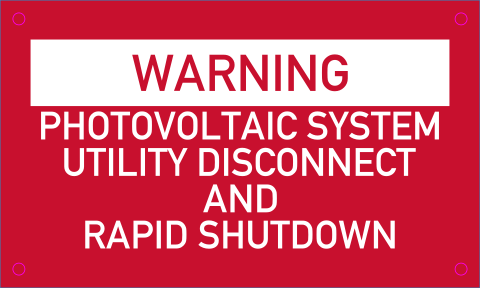
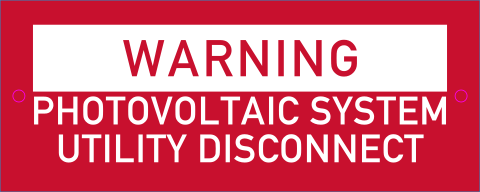
Utility disconnect and rapid shutdown
64-218(7) & 64-200(2) (ESA 64-6-5)
On the utility (supply authority) disconnect when it is also the rapid-shutdown initiating device.
-

Utility disconnect location callout
84-030(1) & 64-076(2) (wording per MB TI 64-112 B)
At the meter socket, where the utility disconnect is permitted to be located other than adjacent.
-
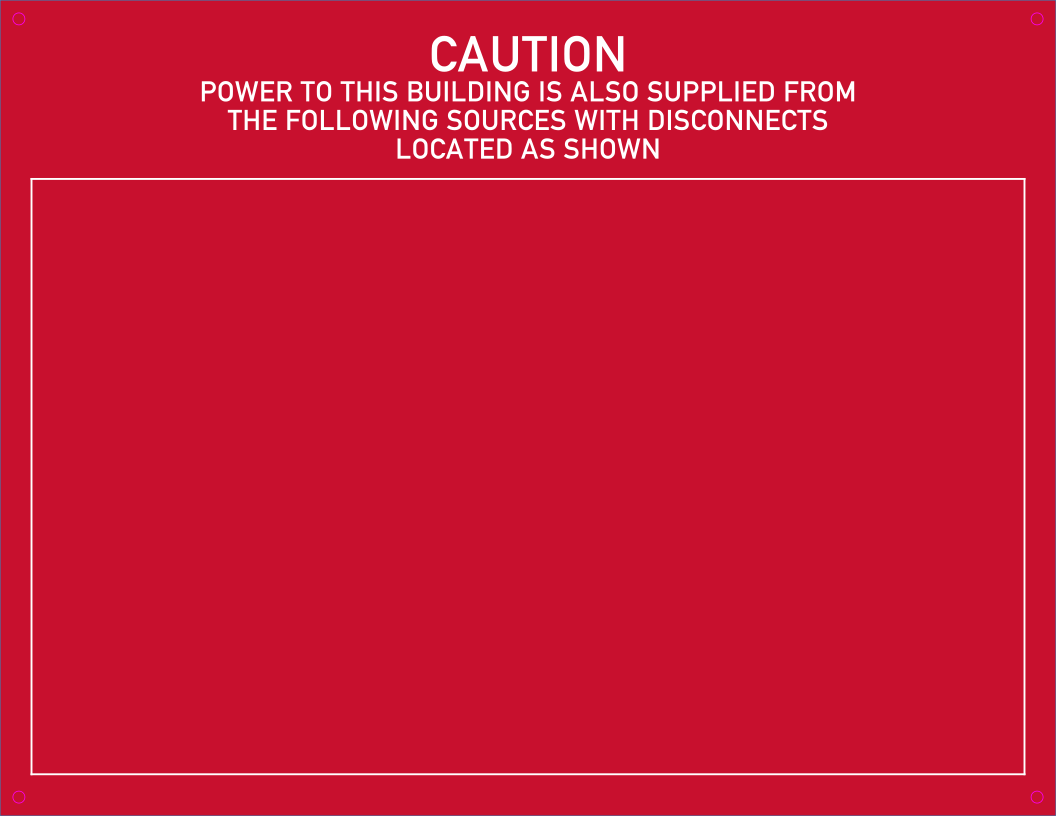
Building source and disconnect location placard
64-218(7) & 64-076(3)
At the supply authority meter location and the consumer's service equipment.
-
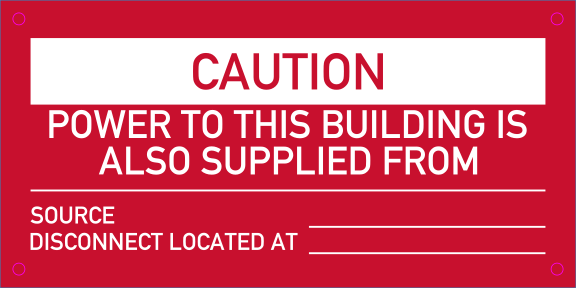
Other supplies - disconnect locations
64-076(2) · 6-102(3)
On or near each disconnecting means where the service and renewable/ESS disconnects cannot be grouped per 6-102(2).
-
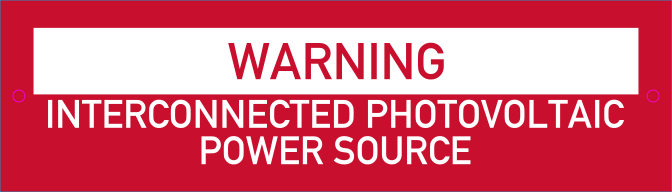
Photovoltaic power source placard
Good practice — no rule number
At the meter base / service equipment as directed by the utility.
-
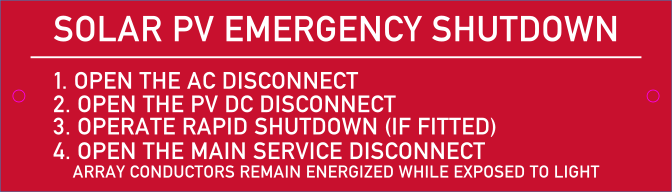
Emergency shutdown procedure
Good practice — no rule number
At the main service disconnect and the inverter.
-
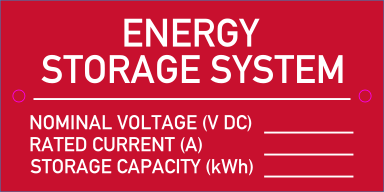
Energy storage ratings (field-assembled, 1 kWh or less)
64-902(2) · 2-100
At a readily accessible location at the ESS disconnecting means.
-
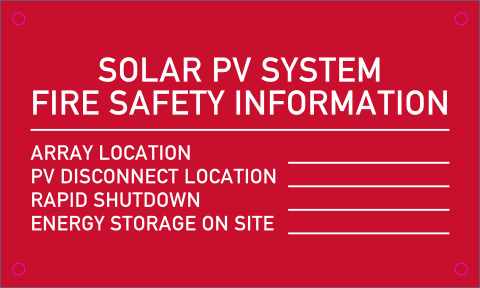
Firefighter / first-responder placard
Good practice — no rule number
At the main entrance or service entrance, per the fire authority.
-

Rapid shutdown initiated by fire alarm
64-218(5)(b)
One at the fire alarm annunciator panel and one at the fire alarm control panel (ship qty 2).
-
Rapid shutdown initiation device locations
64-218(6)
Rapid shutdown initiation device shown on the diagram required by 84-030(2).
-

Remote ground-fault indicator
64-066(9)(a)
At the remote ground-fault indication (light, display or alarm) for GFP equipment that is not readily accessible.
-

AC raceway / conduit marker
Good practice — no rule number
On raceways and enclosures carrying the PV AC output circuit.
-

DC arc-fault protection
Good practice — no rule number
At the inverter or combiner providing DC arc-fault protection.
-

DC conductor polarity - negative
64-212(3) (multi-conductor cable only; 64-212(2) bars field marking of RPV/RPVU)
On multi-conductor PV cable (e.g. TECK 90) where colour coding is field-applied under 64-212(3), at every point where conductors are exposed. Not for single-conductor RPV/RPVU, which 64-212(2) bars from field marking.
-

DC conductor polarity - positive
64-212(3) (multi-conductor cable only; 64-212(2) bars field marking of RPV/RPVU)
On multi-conductor PV cable (e.g. TECK 90) where colour coding is field-applied under 64-212(3), at every point where conductors are exposed. Not for single-conductor RPV/RPVU, which 64-212(2) bars from field marking.
-

-
-

-

Maximum continuous load
2-100(5)
On the overcurrent device enclosure where the maximum continuous load is less than the device's continuous operating marking.
-

Maximum series fuse rating
Good practice — no rule number
At the combiner / source-circuit overcurrent device.
-
-
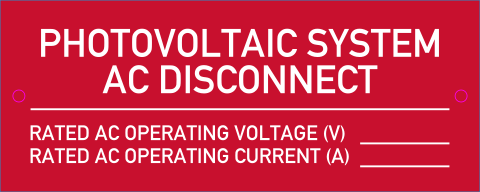
Photovoltaic AC disconnect marking
64-074(1)
Each interconnecting AC power source - AC disconnects for inverters, panelboards, splitters.
-
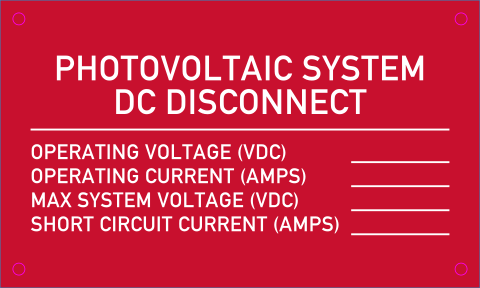
Photovoltaic DC disconnect marking
64-200(1)
String inverters - PV output circuit DC disconnect, at an accessible location.
-

Portable generator inlet - maximum overcurrent
Good practice — no rule number
At an inlet provided for connecting a portable generator.
-
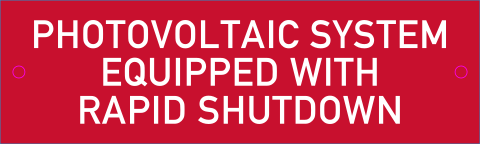
Rapid shutdown at the DC disconnect
64-200(2)
At the disconnecting means for the photovoltaic output circuit.
-
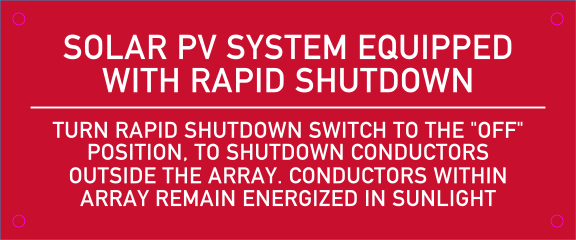
Rapid shutdown placard at meter and service equipment
64-218(7)
At the supply authority meter location and the consumer's service equipment location. On buildings without exterior metering the location may need to be agreed with the local fire department.
-

Rapid shutdown switch identification
64-200(2) & 64-200(3) (ESA 64-6-5)
At the rapid shutdown switch.
-
Single-line diagram of the interconnected system
84-030(2)
Conspicuous location at the supply authority disconnecting means; NSP also requires it inside at the main service panel and any PV sub-panels.
-
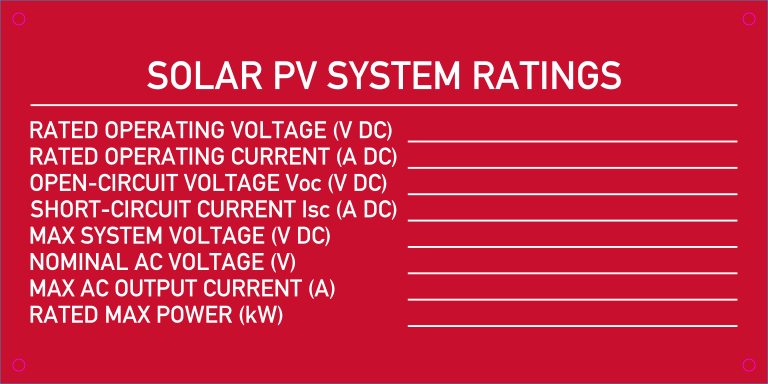
Solar PV system ratings plate
Good practice — no rule number
At the PV DC disconnect / inverter, where the AHJ wants full ratings on one plate.
Ontario
23 labelsPlates Ontario, its utilities or its cities ask for by name. They are cut to that document’s wording whichever province is chosen above.
-

Danger - high voltage boundary notice (over 750 V dc)
ESA 64-3-5 Answer 2 (condition for exemption from 36-006, 36-100, 36-110; with 64-202(5))
Boundary fence: beside the lock on every access gate, at every outside corner, and at intervals not over 15 m. Rooftop: on every door giving access to the array area.
-
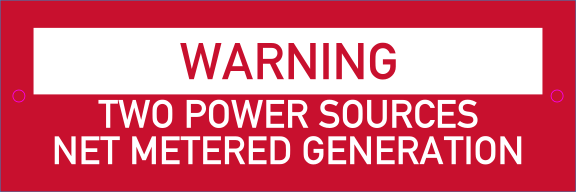
Alectra meter base - net metered generation
Alectra Micro DER Information Package s.8.2 (OESC 84-030(1))
On the meter base (Alectra also requires the lamacoid single-line diagram there).
-
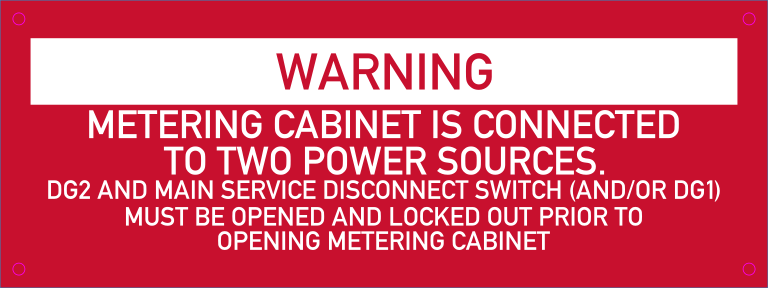
Alectra metering cabinet lock-out warning
Alectra Non-Micro DER Information Package s.12.2
On the main service metering cabinet.
-

DG source disconnect / utility interconnected
2-100 & 84-024 (ESA 64-5-4 A6: rules require labels, not wording)
At the distributed-generation source disconnecting means.
-
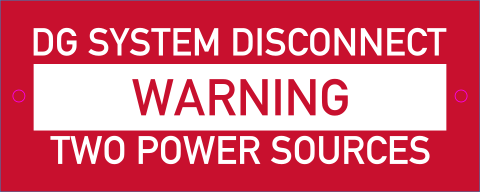
DG system disconnect - two power sources (ESA-SPEC-004)
OESC 84-024 & 2-100 (ESA 64-5-4 A6: wording is guidance)
On the DG system (utility) disconnecting means, recommended adjacent to the utility meter(s).
-
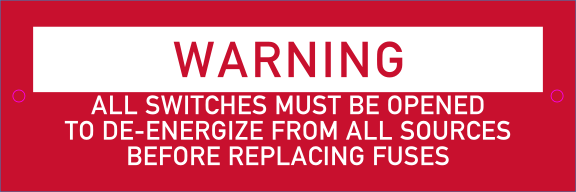
Fuse replacement warning
14-402 & 64-060(3)(c) (ESA 64-5-4 A3; ESA 64-1-5 s.3)
Where a disconnecting means for fuses is not integral with the combiner box - installed within sight and within 9 m of the fuse holder.
-
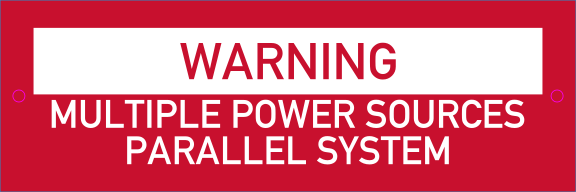
London Hydro multiple power sources sign (DER over 20 kW)
London Hydro EI-27 R0 (12/24) s.3.4.5.1
At the point of disconnection, the DER feeder cell and electrical room / fence door(s).
-

Toronto Hydro legacy two power source system (black)
Toronto Hydro DCS 17-9610 Rev 1 note 5 (legacy)
Fastened permanently to the meter base. Size 75 x 19 mm (3 x 3/4 in).
-
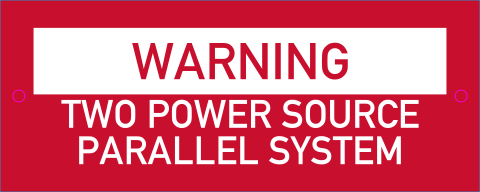
Toronto Hydro two power source warning
Toronto Hydro Ref. 3 Rev 8, App. 1(i) s.1.1.2 and s.3
On the DER main disconnect; s.3 also requires it on the point of disconnection, the DER feeder cell and the switch-room door.
-

Warning - power fed from more than one source (Hydro Ottawa)
Hydro Ottawa MCS0083 R5 Note E / MCS0085 R4 Note Q (C22.2 No. 107.1 cl. 15.4.1.3 wording)
Three per job: meter socket base, customer-owned service panel, DER (DG system fused) disconnect switch. Hydro Ottawa's own labels are white on red (MCS0102 Note A).
-

Warning - two power sources
OESC 84-030(1) / 84-024 (utility wording)
Alectra: on the distributed generation disconnect switch. ESA-SPEC-004 LDCs: on the main breaker of the distribution panel, any sub-panel/switch where feedback is possible, and adjacent to the revenue meter(s).
-
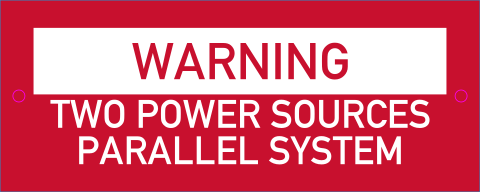
Warning - two power sources parallel system
Alectra Non-Micro DER Information Package s.12.2
On the main service disconnect switch and on the main service metering cabinet.
-

Alectra distributed generation disconnect
Alectra Micro DER Information Package s.8.2 and s.8.5.2(h)
On the DG disconnect switch, mounted with the meter on the exterior wall 1.7-2.1 m above grade.
-

Alectra main service disconnect
Alectra Non-Micro DER Information Package s.12.2
On the main service disconnect switch.
-
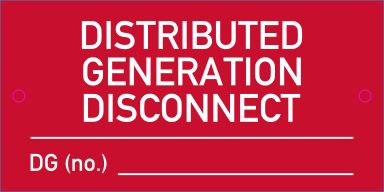
Alectra numbered DG disconnect (three-phase)
Alectra Non-Micro DER Information Package s.12.2
DG2 on the distributed generation disconnect; DG1 at the main service disconnect switch where applicable.
-
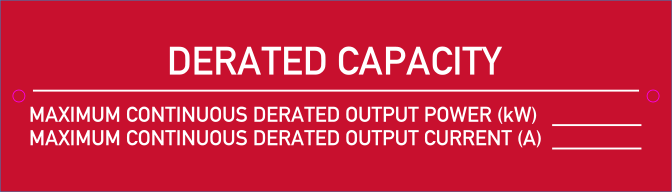
Field-derated inverter capacity
OEB DERCP s.5.1 conditions 1-2; ESA 64-1-5 Answer 2 item 2 (Rules 64-112, 8-104, 14-100)
On the inverter, adjacent to its nameplate (DERCP s.5.1: 'clearly indicated on the equipment, adjacent to the nameplate').
-

Hydro One MicroDER disconnect switch
Hydro One DP-12-003 R0 s.2.4.2(j) (OESC 84-024)
On the utility-accessible external disconnect switch (EDS) of a micro-embedded (12 kW or less) facility in Hydro One territory.
-
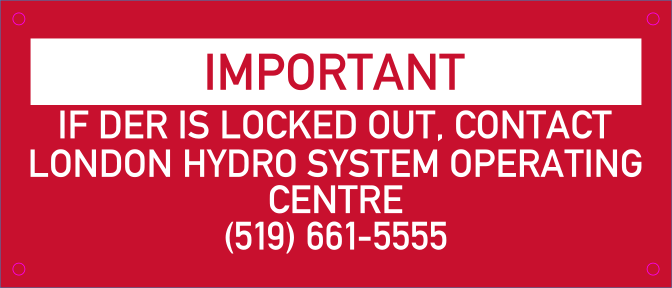
London Hydro DER lock-out notice (DER over 20 kW)
London Hydro EI-27 R0 (12/24) s.3.4.5.2
At the point of disconnection and the DER feeder cell.
-

Maximum fuse size at the DG disconnect
Alectra Micro/Non-Micro DER packages s.8.2 / s.12.2; Hydro Ottawa MCS0102 Note H
On the fused DG / DER disconnect switch.
-

Toronto Hydro legacy DG system disconnect (black)
Toronto Hydro DCS 17-9610 Rev 1 note 4 (legacy)
Fastened permanently to the isolating device. Size 75 x 19 mm (3 x 3/4 in).
-

Toronto Hydro legacy generator meter (black)
Toronto Hydro DCS 17-9610 Rev 1 note 6 (legacy)
On the respective meter base (load / generator). Size 75 x 19 mm (3 x 3/4 in).
-

Toronto Hydro legacy load meter (black)
Toronto Hydro DCS 17-9610 Rev 1 note 6 (legacy)
On the respective meter base (load / generator). Size 75 x 19 mm (3 x 3/4 in).
-

Toronto Hydro main DG disconnect
Toronto Hydro Conditions of Service Ref. 3 Rev 8, App. 1(i) s.1.1.2 (OESC 84-026 referenced)
On the DER main disconnect (within 2 m of the revenue meter for single residential micro-embedded; exterior-wall disconnect in series if the meter is in the basement).
British Columbia
6 labelsPlates British Columbia, its utilities or its cities ask for by name. They are cut to that document’s wording whichever province is chosen above.
-
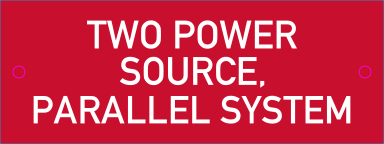
Two power source, parallel system (BC Hydro)
84-030(1) / BC Hydro DGTIR-100 4.2.3.2
At the DG System Disconnect location (4.2.3.2 a)) and at the revenue-metering instrument transformer enclosure (4.2.3.2 b)); order 2.
-
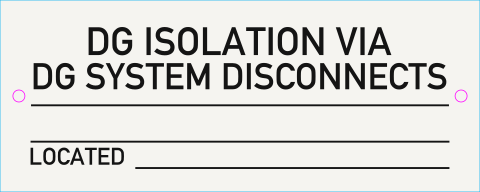
DG isolation location (BC Hydro)
BC Hydro DGTIR-100 4.2.3.2 b)
At the revenue-metering instrument transformer enclosure. First field: the disconnect identifier(s) (e.g. DS-DG1); second: the location (e.g. IN THE UTILITY ROOM).
-
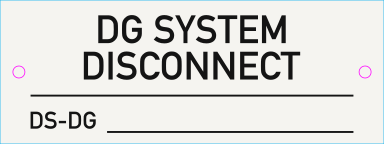
DG system disconnect identifier (BC Hydro)
BC Hydro DGTIR-100 4.2.3.2 a)
On each DG System Disconnect (the lockable DG-side disconnect of the instrument transformer enclosure); identifier must be unique and match the SLD and the isolation label.
-

Disconnect / RSD initiator - array it controls (Vancouver)
64-060 / 64-218(4) (Vancouver special permission)
On the PV disconnecting means or rapid-shutdown initiator that is out of sight of the array it serves.
-
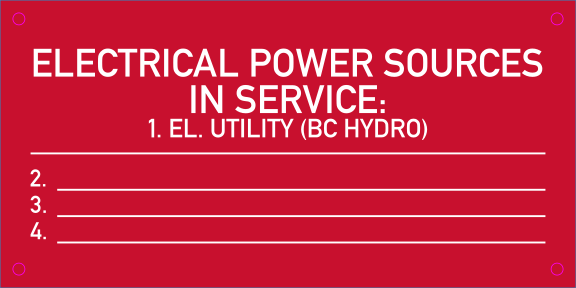
Electrical power sources in service (BC Hydro sample)
64-076(3) / BC Hydro sample SLD
At the service equipment / revenue meter with the simplified single-line diagram; list each source (e.g. "ROOFTOP PV SOLAR GENERATOR (DG-1)").
-

Utility-assigned disconnect switch number
84-022 / utility interconnection requirements
On the generator / utility disconnect switch, carrying the number assigned by the utility (BC Hydro, Yukon Energy, ATCO Electric Yukon, Qulliq Energy).
Alberta
15 labelsPlates Alberta, its utilities or its cities ask for by name. They are cut to that document’s wording whichever province is chosen above.
-

DG overcurrent device
Good practice — no rule number
On the switchgear at the upstream breaker (DG Disconnect #0).
-
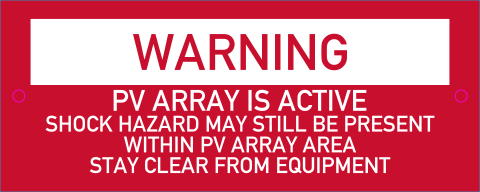
RSD remote station legend - array still active (Edmonton)
Good practice — no rule number
Beside the pilot light on the City of Edmonton standard rapid-shutdown remote station, amber pilot light, label (ii).
-
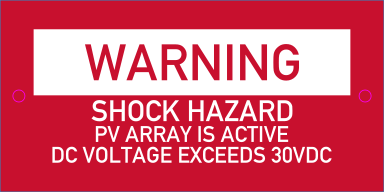
RSD remote station legend - DC voltage exceeds 30 V (Edmonton)
Good practice — no rule number
Beside the pilot light on the City of Edmonton standard rapid-shutdown remote station, green and blue pilot lights, label (ii) (one per light).
-
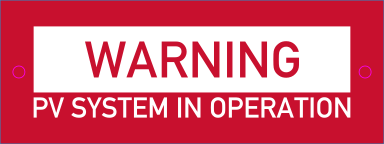
RSD remote station legend - PV system in operation (Edmonton)
Good practice — no rule number
Beside the pilot light on the City of Edmonton standard rapid-shutdown remote station, green pilot light, label (i).
-
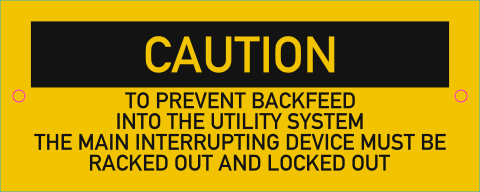
Prevent backfeed - rack out and lock out (ENMAX network)
Good practice — no rule number
On the main service disconnect (main interrupting device), beside the red UTILITY MAIN INTERRUPTING DEVICE sign.
-
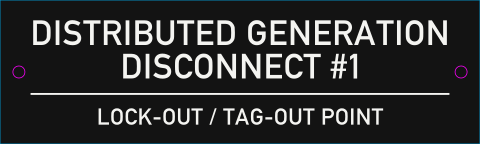
Distributed generation disconnect
Good practice — no rule number
At the DG disconnect - the designated lock-out/tag-out point isolating the PV system from the building electrical system.
-

Inverter number (Edmonton)
Good practice — no rule number
On each inverter and its AC isolation breaker or disconnect; numbered from the north-west inverter, moving east then south.
-

MG disconnect switch (Medicine Hat)
84-022 / City of Medicine Hat MG guide s.5.1.3
On the external disconnecting means (EDM) required by City of Medicine Hat Electric for micro-generation.
-
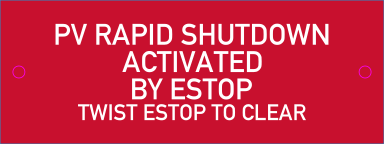
RSD panel legend - activated by ESTOP (Edmonton)
Good practice — no rule number
Beside the pilot light on the City of Edmonton standard rapid-shutdown master panel, amber pilot light (manual ESTOP).
-
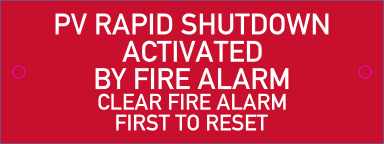
RSD panel legend - activated by fire alarm (Edmonton)
Good practice — no rule number
Beside the pilot light on the City of Edmonton standard rapid-shutdown master panel, red pilot light (fire-alarm input).
-

RSD panel legend - PV system in operation (Edmonton)
Good practice — no rule number
Beside the pilot light on the City of Edmonton standard rapid-shutdown master panel, green pilot light.
-

RSD panel legend - rapid shutdown cleared (Edmonton)
Good practice — no rule number
Beside the pilot light on the City of Edmonton standard rapid-shutdown master panel, blue pilot light.
-
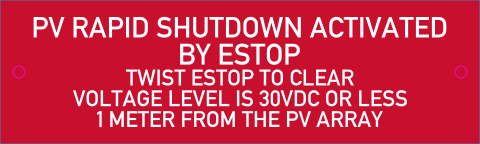
RSD remote station legend - activated by ESTOP (Edmonton)
Good practice — no rule number
Beside the pilot light on the City of Edmonton standard rapid-shutdown remote (slave) station, amber pilot light, label (i).
-

RSD remote station legend - cleared, resume from main room (Edmonton)
Good practice — no rule number
Beside the pilot light on the City of Edmonton standard rapid-shutdown remote station, blue pilot light, label (i).
-

Utility main interrupting device (ENMAX network)
Good practice — no rule number
On the main service disconnect (main interrupting device) of a generating customer on the ENMAX secondary network.
Saskatchewan
4 labelsPlates Saskatchewan, its utilities or its cities ask for by name. They are cut to that document’s wording whichever province is chosen above.
-
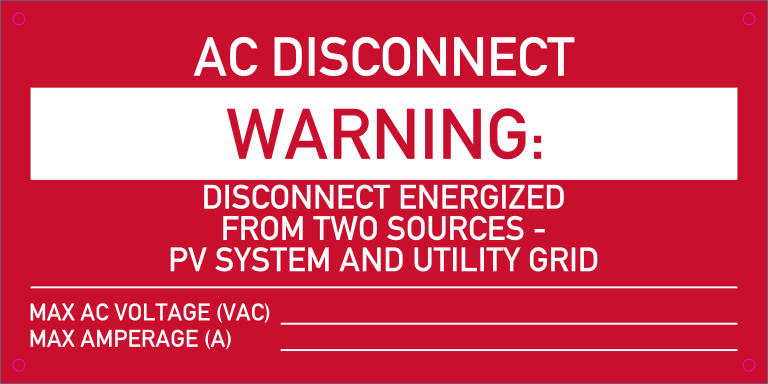
AC disconnect energized from two sources
64-060(1)(h)
On an AC disconnect fed from both the PV system and the utility grid. An alternative TSASK example to 64-060-10_ac-disconnect-shock-hazard.
-

Adjustable OCPD - maximum rating, do not adjust
14-104(1)(b)
On an adjustable-trip breaker or fused disconnecting switch (e.g. PV AC disconnect, utility disconnect, service or feeder device) where the cable ampacity is less than the device's maximum rating. Layout: "MAX ____ A" then "DO NOT ADJUST".
-

Customer owned generation - disconnect switch inside (Saskatoon L&P)
84-022 / SL&P IG2022 3.1.2
On the building near the electric service entrance, when SL&P has approved an indoor location for the utility disconnect switch. SL&P may also require posted directions and/or a lockbox.
-
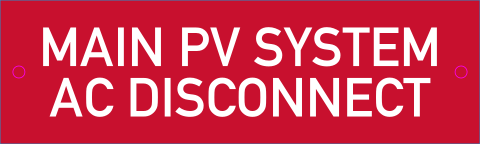
Main PV system AC disconnect
64-060(1)(h)
On the main PV system AC disconnect (a disconnect fed from two sources). Identification only; the 64-060(1)(h) shock-hazard warning is still required.
Manitoba
1 labelPlates Manitoba, its utilities or its cities ask for by name. They are cut to that document’s wording whichever province is chosen above.

Nova Scotia
4 labelsPlates Nova Scotia, its utilities or its cities ask for by name. They are cut to that document’s wording whichever province is chosen above.
-
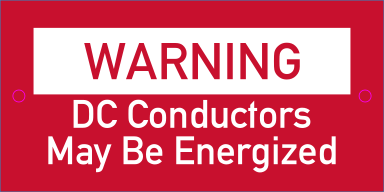
NSP DC conductors may be energized
64-068(1)(b) / 64-066(7) (NSP B-64-200 wording)
Exterior DC disconnecting means and DC transition boxes.
-
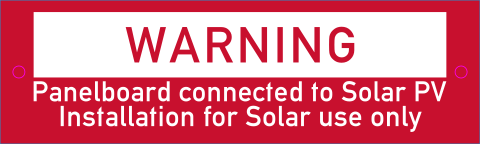
Solar panelboard on dual-lug meter base
NSP B-64-200 p.6-7 (with 64-112(2))
On a solar panelboard connected to a dual lug meter base.
-
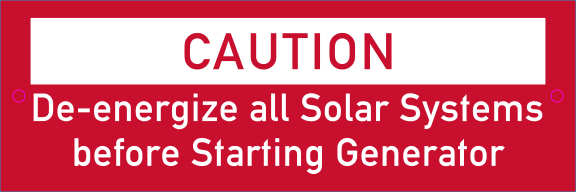
Generator transfer switch caution
NSP B-64-200 p.6 (inspection-authority requirement)
At the transfer switch location.
-
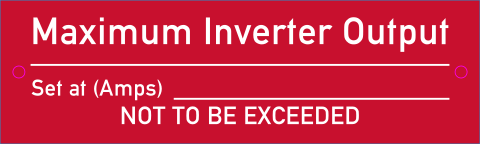
Maximum inverter output
NSP B-64-200 p.1 (inspection-authority requirement)
On or adjacent to the inverter and the main AC disconnect switch. Where micro-inverters are used, required only on the main AC disconnect. Applies to DC string inverter systems.
Prince Edward Island
1 labelPlates Prince Edward Island, its utilities or its cities ask for by name. They are cut to that document’s wording whichever province is chosen above.
-

Net-metering system disconnect
PEI Net-Metering System Regulations (EC765/05) Schedule s.2; Maritime Electric Net Metering Agreement s.2
On the manual load-break disconnect (lockable open, utility-accessible) in the immediate vicinity of the meters, or at the utility-approved alternative location.
Northwest Territories
1 labelPlates Northwest Territories, its utilities or its cities ask for by name. They are cut to that document’s wording whichever province is chosen above.
-

DG disconnect switch (NTPC / Naka Power)
84-022 / NTPC DR TIG s.10.0
On the DG (utility) disconnect switch. The number field carries the identification number the Wires Owner (NTPC or Naka Power) approves.
811 plate designs in all — each label in every province’s wording. Need something that is not here? The builder engraves your own wording, and a plate list or drawing can be sent for a quote.